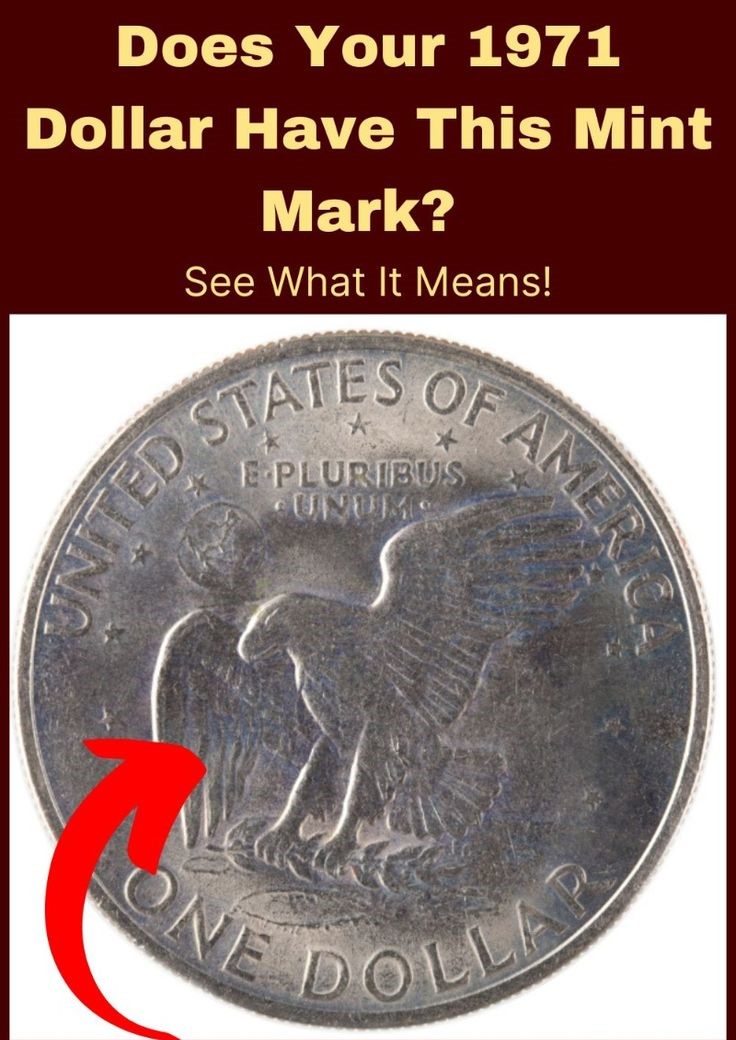
Imagine owning a coin that shouldn’t exist — a rare test strike made with the wrong metal AND an abandoned design.
That’s exactly what happened with the 1971 “High-Relief Prototype” Eisenhower Dollar, a legendary error now valued at over $100,000. 🤯
Let’s break it down step by step so you understand why this coin is so rare and how YOU can check your own 1971 dollars like a pro.
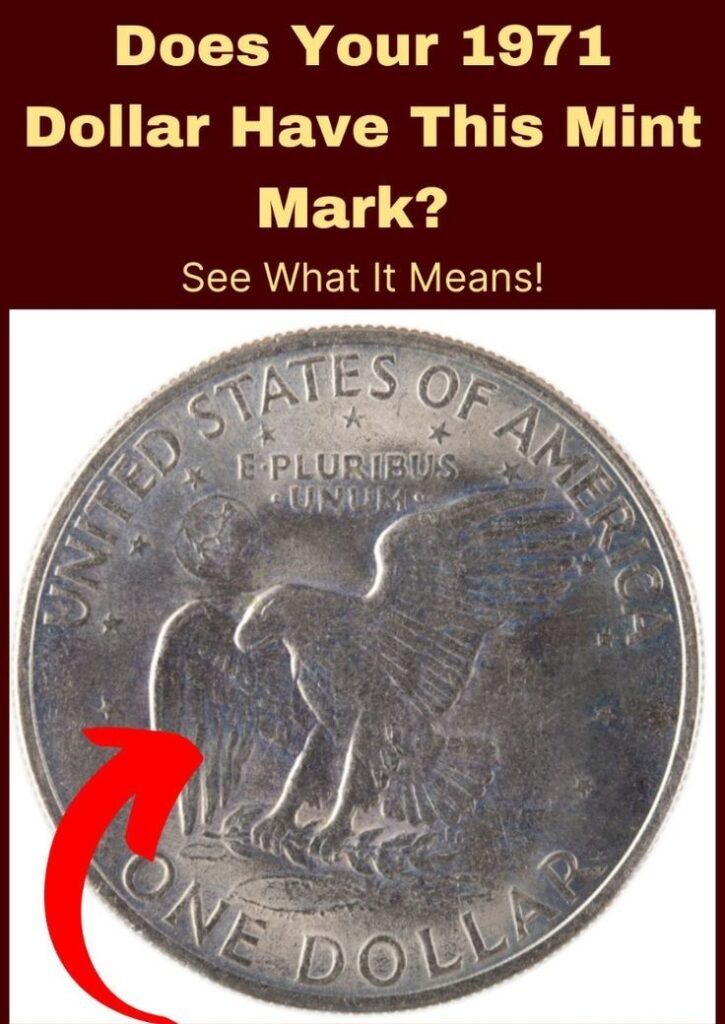
🪙 1. First, Know the Basics of the 1971 Eisenhower Dollar
Most people confuse regular 1971 Ike dollars with rare ones. Here’s what really matters:
🔸 Clad vs. Silver
- Most 1971 dollars were made of copper-nickel clad.
- These came from:
- Philadelphia (no mint mark)
- Denver (“D”)
- The only 40% silver versions were made in San Francisco (“S”), for collectors.
👉 If your 1971 dollar has no mint mark, it is normally a common clad coin — NOT silver.
🔸 Mint Mark Location (Important!)
Many beginners look in the wrong place.
✔ The mint mark on ALL Eisenhower dollars is on the front (obverse)
✔ Located just above the date
🌕 2. The Mystery of the $100,000 Prototype Reverse Dollar
This insanely rare coin is valuable because it combines three massive minting mistakes:
⚙️ A. Struck with the Wrong Metal
A Philadelphia “no-mint-mark” coin was accidentally struck on a 40% silver planchet — which should ONLY have been used in San Francisco.
🎨 B. Struck with a Prototype High-Relief Reverse
Before release, the U.S. Mint tested several reverse designs.
One design — a deeply detailed, high-relief eagle — was stunning but too difficult to mass-produce.
The dies were ordered destroyed… except one wasn’t. 👀
🧩 C. Used During the First Year of the Series
Anything unusual from the first year of a major coin series becomes instantly collectible.
⭐ Result?
A single coin combining all three errors = $100,000+ at auction.
Collectors would fight fiercely to own it.
🔍 3. How to Check If YOU Have a Valuable 1971 Dollar
Here’s the step-by-step guide, perfect for beginners:
🥇 Step 1: Check the Edge for Silver
Look closely at the thin edge of your coin.
- Normal clad coin: ✔ Visible copper stripe
- Possible silver error: ❗ Solid shiny silver-colored edge
If you see NO copper, continue to the next step!
🥇 Step 2: Weigh the Coin (Very Important!) ⚖️
Use a digital scale (cheap and very useful).
- Normal clad Ike: 22.68g
- Silver planchet Ike: 24.59g (almost 25g)
👉 If your no-mint-mark Ike weighs around 24.5–25 grams, you may have a major discovery.
🥇 Step 3: Inspect the Eagle Design
This is the final test for the $100,000 prototype.
Use a magnifying glass and compare the eagle to a regular Ike dollar.
Look for:
✨ Deep, 3D feathers
✨ Dramatic high-relief wings
✨ Deep, sharp craters on the moon
✨ Overall “sculpted” appearance
If the details look MUCH sharper than normal… you may have something extraordinary.
🛡️ 4. What To Do If You Think You Found an Impossible Coin
If you see all three signs — silver, heavy weight, high-relief eagle — take these steps:
✔ Protect Immediately
Hold only by the edges and place into a coin holder.
🚫 DO NOT CLEAN IT
Cleaning removes valuable surface details and can cut the coin’s value by 90%.
🧪 Have It Authenticated
Send it to a top-tier grading service:
- PCGS
- NGC
Without certification, even a real discovery is worth nothing.
🏆 Contact a Major Auction House
If confirmed, only world-class auctioneers can reach wealthy collectors willing to pay six figures.
🌍 5. The Worldwide Hunt for Rare Silver Ikes
These coins have traveled everywhere over the past 50 years — from U.S. estates to markets here in Siem Reap, Cambodia.
A rare treasure could literally be hiding in a box of old coins.
All you need is the knowledge to spot one. 😉
👉 Have a 1971 dollar that looks different?
Share clear photos of the front, back & edge with our community! 📸
Leave a Reply